Layer 01
Consent
Adult-derived cells · approved programs · participant rights
CoreX combines four layers into one integrated engine, supporting defined programs in drug safety, dosing, pharmacokinetics, and population-specific response. Every biological asset should be traceable to consent, purpose, governance, and permitted use, and each application is developed within a defined context of use, not a broad universal claim.
Scroll through the engine. Each layer builds on the one before it, and every cycle adds to the evidence.
Every CoreX program begins with consented, adult-derived cells from relevant populations, each traceable to its consent, purpose, and permitted use.
Those cells become Bio-Avatars and organ-on-chip systems: living, donor-specific models that show how human tissue actually responds.
Bio-Avatars are organized into governed cohorts, so biological response can be studied across selected population groups, not a single average.
Auditable models learn from biological response within defined contexts of use, turning signal into decision-support intelligence.
Each governed cycle adds to a sovereign biological intelligence asset that becomes more valuable as evidence accumulates.
CoreX is not a single technology. It is four reinforcing layers that become more valuable together, and more valuable over time.
Bio-Avatars and organ-on-chip systems built from consenting human cells.
Regional cohorts and biological diversity, not a single average.
Consent, ethics, sovereignty, and a secure research environment.
Models that improve as governed biological response data accumulates.
CoreX deploys proven Bio-AI and organ-on-chip capabilities from Quris-AI into sovereign, population-specific medicine programs.
Quris-AI develops the underlying Bio-AI clinical prediction platform. CoreX applies this platform within governed population cohorts, regional biological intelligence programs, and sovereign health-system partnerships.
A Bio-Avatar is a living, donor-specific model of selected biological systems.
From a single donor's cells, CoreX grows living models of their biology, heart, liver, kidney, blood-brain barrier and more, and connects them on one chip through a shared microfluidic channel. Exposed to a medicine, the models generate donor-specific biological response data, within defined contexts of use. This is the living foundation the engine is built on, before any AI.
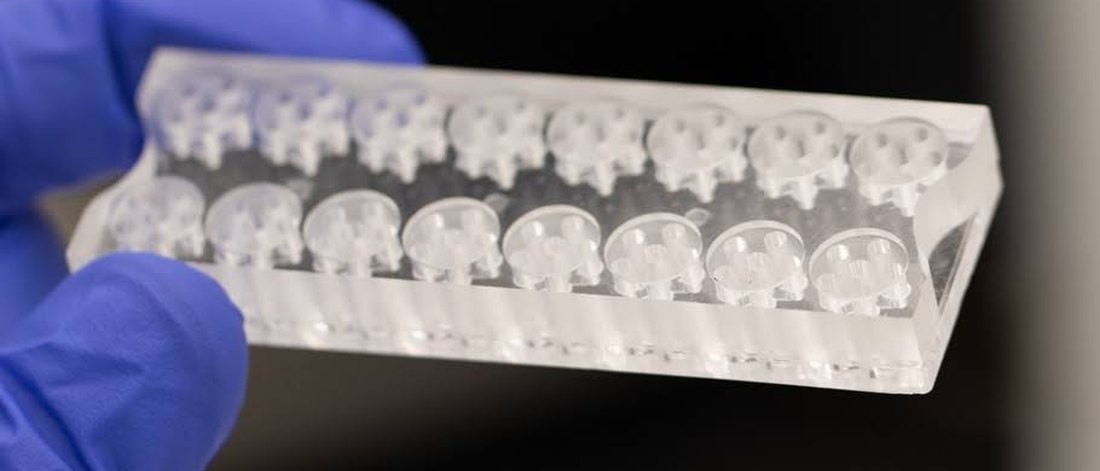
Beats. Contracts in real time, so we can read how a medicine affects the heart.
Metabolises. Breaks compounds down, revealing toxicity and clearance.
Filters. Clears compounds from the system and flags renal stress.
Gatekeeps. Models whether a compound can cross from blood into the brain.
This is where CoreX begins: not with generic data, but with living human biology.
Most CoreX programs follow a governed path from consented biological sourcing to Bio-Avatar generation, organ-on-chip testing, biological response data, and AI-enabled interpretation.
Consented adult-derived cells from relevant populations, each traceable to consent and governance.
iPSC-derived Bio-Avatars and organ-on-chip systems that recreate how human tissue behaves.
Run medicines across the models to produce 3D human response data: toxicity, metabolism, and exposure.
Governed Bio-AI learns drug-to-response patterns across individuals and population groups.
Population-specific safety, dose, and exposure-response signals, so a medicine can be studied against the people who take it.
What a partner may receive: toxicity-risk signals, pharmacokinetic and dose-response profiles, exposure-response insights, and population-specific risk analysis, each delivered with documented methods, comparators, and limitations.